Moving between homes can leave a gap between the day one home must be vacated and the day the next home is ready. Storage provides somewhere for furniture and stock to go between properties, which can reduce clutter and make the move easier to manage.
A moving storage checklist starts before the first box leaves home. Decide what goes into storage, estimate the space needed, plan the packing, confirm transport dates, and map out where furniture and boxes go inside the unit.
Plan those decisions early, and move day has fewer loose ends.
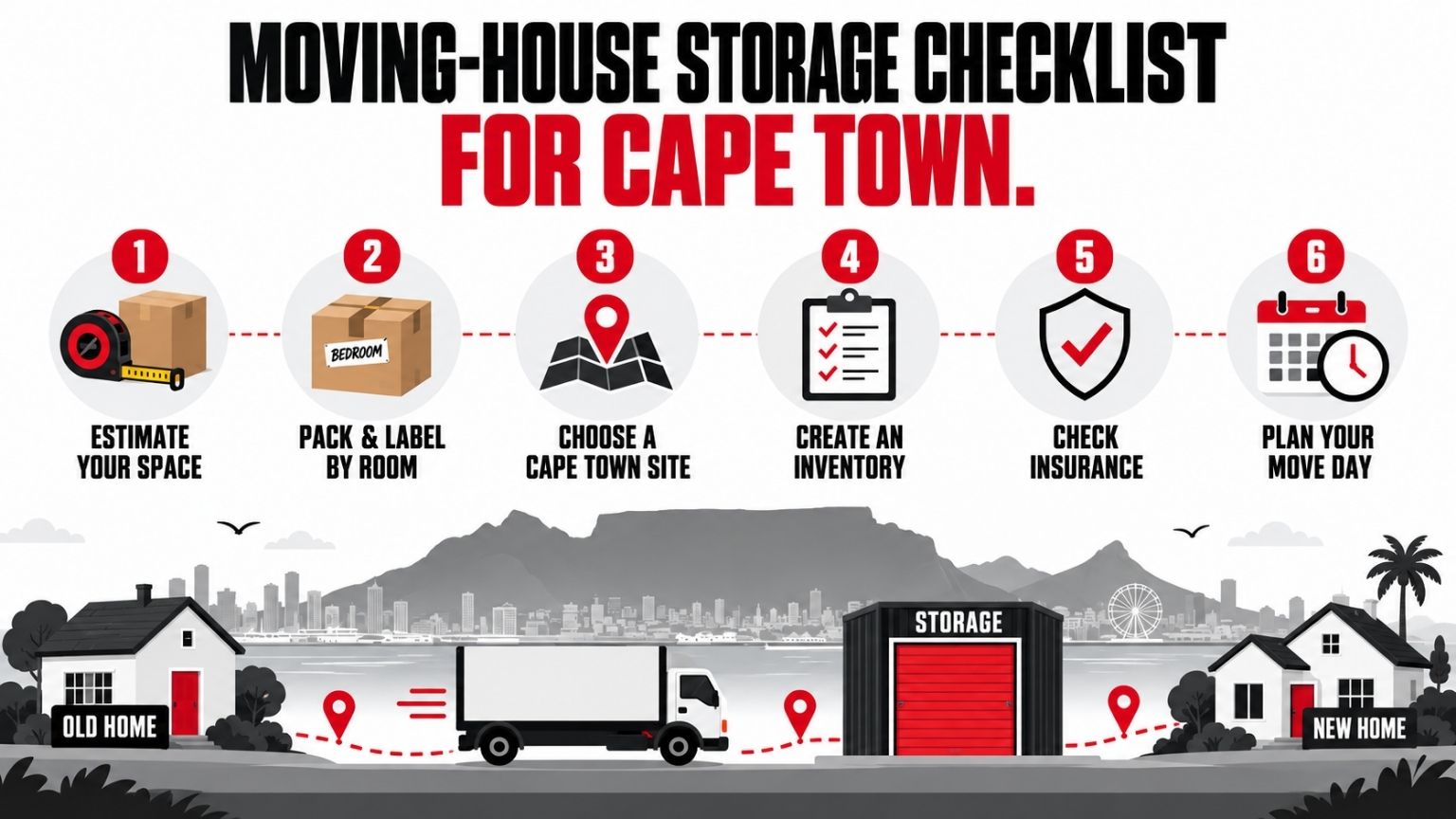
Work through the sequence before moving day. Each point removes one avoidable source of delay, wasted space, or confusion later.
Confirm the dates for storage before you book transport.
· Categorise belongings by storage, new home, donation, or disposal destination.
· Measure storage requirements against furniture sizes, appliance sizes, and the number of packed boxes.
· Choose a Cape Town location that reduces unnecessary travel.
· Check the unit size, opening times, security and how collection works.
· Get good boxes, furniture covers, tape and labels before packing starts.
· Write the room, contents, and unpacking priority on every box.
· Create an inventory before the first load leaves home.
· Place heavy items closer to the floor and priority items near the door.
· Photograph the packed unit and save key documents securely.
The sections below explain the decisions that can prevent wasted space, repeat trips, poor box placement, and avoidable damage.
Paying for unused space increases storage costs, while limited space can leave furniture and boxes difficult to organise. Start with the largest furniture and appliances, then estimate how many boxes require storage.
Current Inospace size bands span 1 m² to more than 30 m², with different household volumes across each band. Storage capacity varies with item size, stacking height, and the gaps required between groups.
Storage requirements can change between a small flat and a larger household. Note the biggest items first, such as beds, couches, appliances, and patio furniture, before checking the current size guide.
Transport boxes face a short journey, while stored possessions can spend weeks or months behind a closed door. Preparation should account for weight, surface protection, dryness, labels, and later retrieval.
Choose sturdy boxes and avoid cartons that flex once loaded. Put the heavier cartons below lighter ones. Fill empty gaps inside boxes with suitable protective material and place labels on more than one visible side. Inospace recommends sturdy boxes, labels, and heavier boxes at the bottom.
Pack furniture only once it is clean and dry and do the same with appliances. Cover surfaces that could mark during storage. Remove loose shelves and put bolts, screws, and other small pieces into labelled bags, with each bag matched to the right item.
Certain goods create safety, hygiene, or legal problems. Exclude these from the storage load:
· Flammable liquids or materials with a fire risk.
· Explosives, fireworks, or other hazardous explosive goods.
· Perishable food that can spoil during storage.
· Illegal goods or items prohibited by law.
· Live animals under any circumstance.
Current Inospace rules prohibit these categories, among others. Always confirm facility terms before moving day. A little preparation before storage protects possessions and makes both drop-off and unpacking easier, especially when every box has a clear destination.
A storage trip can involve three points: the old home, the unit, and the new address. Cape Town congestion is typically heavier during morning and evening peaks.
A route and time plan can reduce idle road time. Site hours vary by Inospace location. Confirm the relevant location before transport is booked.
1. Confirm site hours first, then choose a transport slot that matches entry, load handling, and collection requirements.
2. Map the old home, storage location, and new address in order, then estimate each drive separately.
3. Add time for lifts, stairs, vehicle space, offload time, box checks, and unit placement, not road travel by itself.
4. Set keys, ID, medication, chargers, and toiletries aside before packing the rest. Add whatever will be required before the packed items are available again.
Planning each stop in advance can reduce repeated journeys and give the working day a more manageable pace when delays arise.
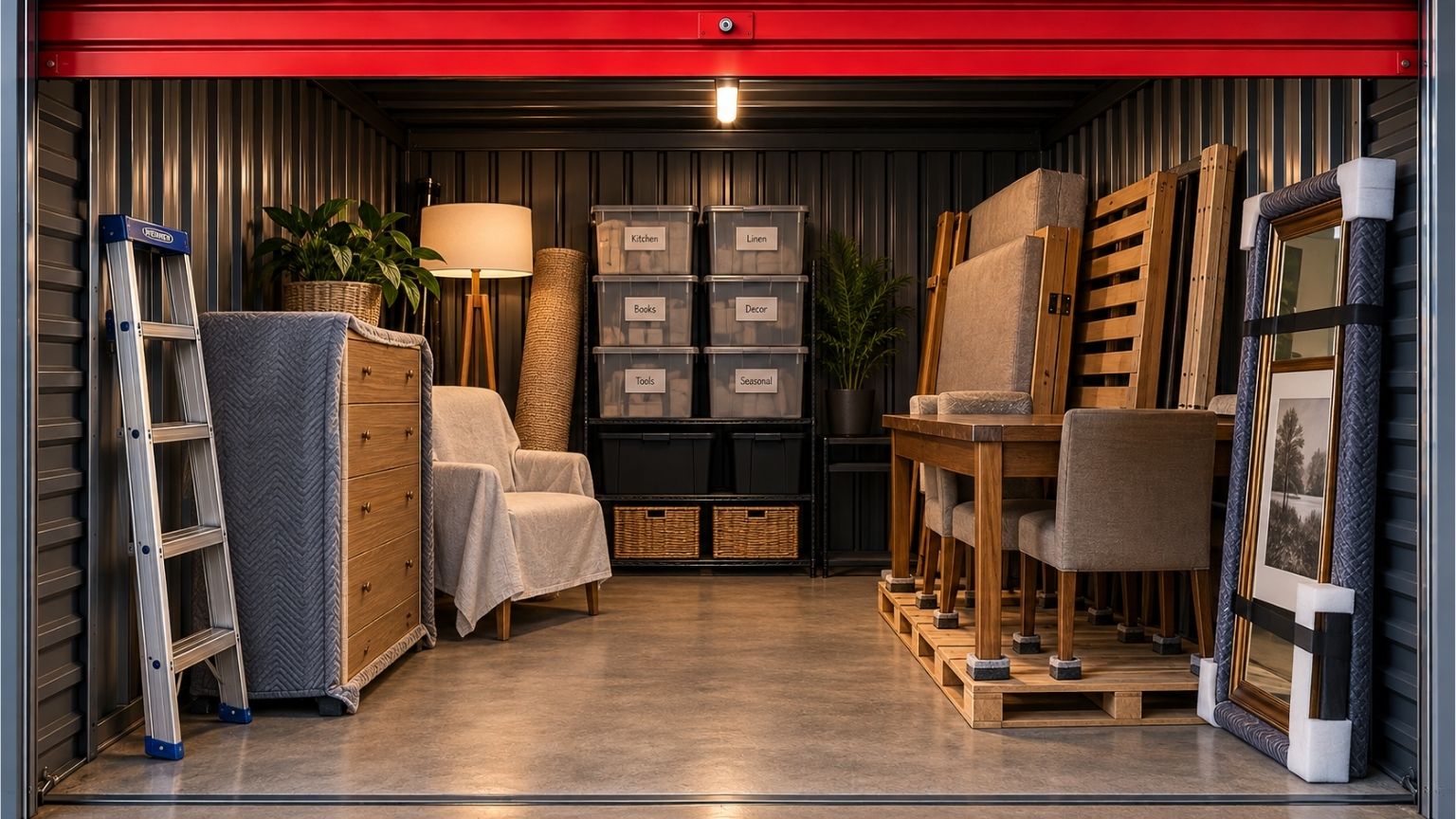
The first box inside should not decide where everything else goes. Group possessions by room or purpose, leave a path to priority items, and place sturdy, heavy pieces beneath lighter boxes.
Labels should face the aisle or door where possible. Put items with low retrieval priority deeper inside the unit, while documents, seasonal necessities, work equipment, or a child’s essential items should be nearer to the entrance.
A family with an eight-week storage period could place spare décor and rarely required furniture near the rear, with school items, work equipment, and a small essentials box near the door.
Five final checks can prevent a return trip or an avoidable surprise after the unit has been secured.
· Confirm that the inventory matches the possessions inside the unit.
· Save photos of furniture, box labels, and the final layout.
· Place priority boxes where the door route is unobstructed.
· Confirm keys, entry details, and site hours before departure.
· Check insurance terms for possessions stored away from home.
Insurance is not compulsory, but Inospace encourages it, and clients are responsible for stored goods. Confirm your household policy and storage terms before the move.
A final check now can save an extra trip later and leave fewer loose ends during an already busy house move.
Inospace supports Cape Town households with flexible storage options across several locations, such as the CBD, Woodstock, Maitland, and Paarden Eiland.
Unit sizes range from compact storage requirements to the contents of a larger household, with month-to-month terms available for shorter periods between properties. Several security measures protect vehicles in storage, including CCTV, restricted entry, on-site security, and individually secured units.
Explore a Cape Town storage option that is suitable for your move and timeline.
Book once the moving date and expected storage volume are certain. Popular unit sizes can fill up at a preferred location. Confirm the date, note the larger items, and estimate the number of boxes before comparing suitable storage options.
Begin with the largest furniture, appliances, and estimated box total. Compare that load with the current size guide, then allow room for safe placement and retrieval. The floor measurements might look generous at first. Once larger furniture is stored and an aisle is left open, the unit can become cramped.
Storage preparation starts before an appliance leaves its current space. Clean and dry each item, protect easily damaged finishes and secure removable components. Labelled bags are a simple option for screws, fittings, and other small pieces. Fridges and freezers should be empty and dry, with manufacturer guidance followed where special storage instructions apply.
Check your household insurance policy and the storage terms before moving day. Current cover does not always apply in the same way once possessions leave the home. Inospace encourages insurance for stored goods. Confirm whether current coverage is adequate or whether extra protection is appropriate.
A smooth storage plan begins with a firm sort, a realistic size estimate, careful box preparation, and a route suitable for the day. Place possessions in a way that supports later retrieval, complete the final checks, and save the inventory with your move documents.
Choose an Inospace storage option in Cape Town that supports your move, your timetable, and the space you require.