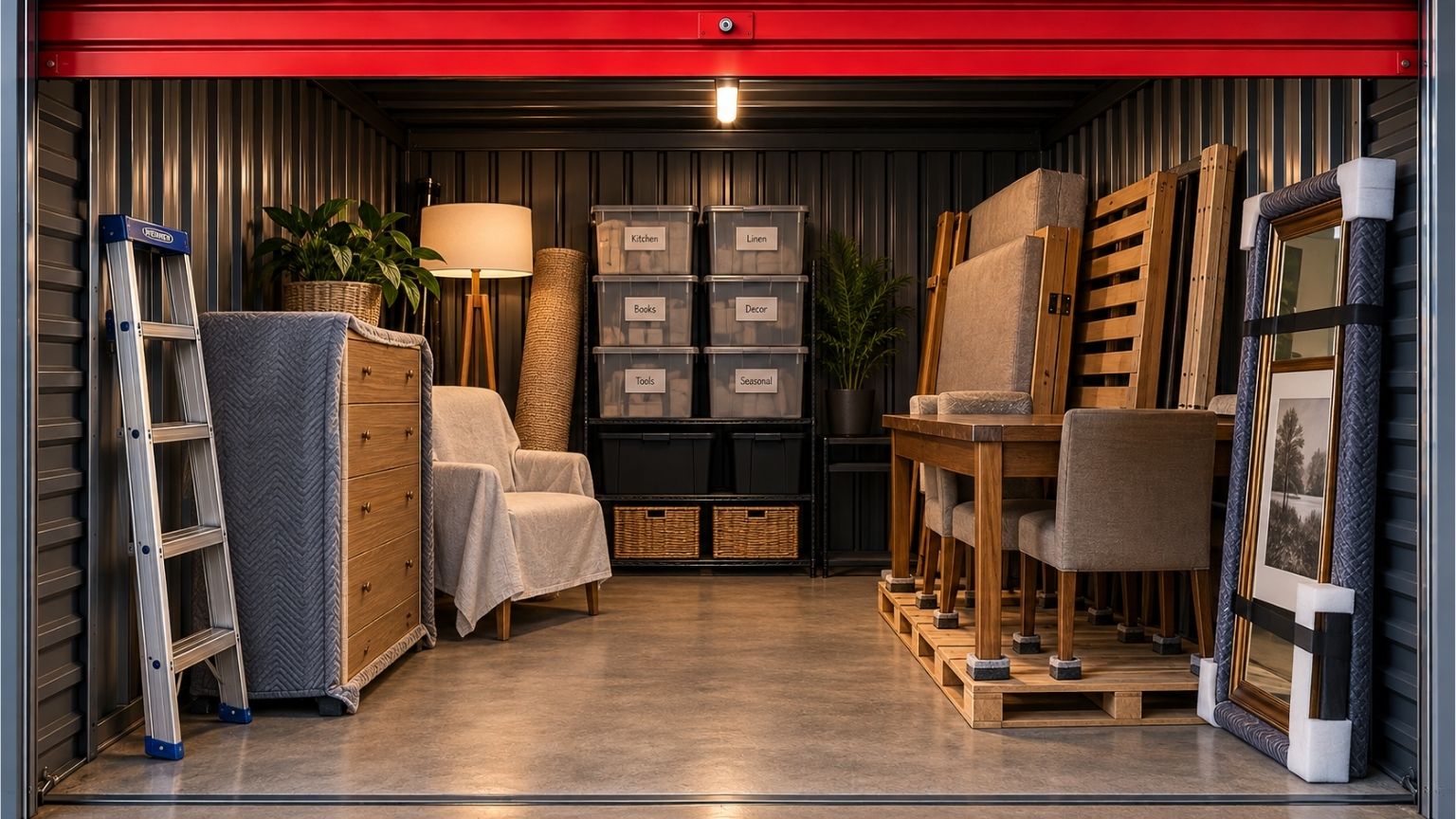
Proper furniture storage starts before moving day. Dust left on fabric, moisture trapped under covers or weight placed against the wrong surface can leave furniture in poorer condition by the time it leaves storage.
Clean and dry each item first, then select protection according to the material. A planned layout also prevents heavy pieces from ending up above fragile furniture or blocking items required earlier.
Low placement is safer for heavier furniture, while glass and delicate pieces benefit from extra space between items. Clear walking routes make collection more efficient and reduce unnecessary handling when furniture returns to the business.
Furniture should go into storage clean and dry. Remove dust, crumbs, marks, and residue with a cleaning method suitable for the material, with extra drying time for fabric, seams, and cushions.
Check fabric and timber for any remaining moisture before covering the vehicle. Damp materials under a cover create conditions where mould, odours and surface marks can develop. Harsh cleaning products are best avoided unless approved by the manufacturer.
Removing detachable sections can make bulky furniture easier to handle during transport and storage. Shelves, drawers, legs, and headboards can be separated where the furniture permits.
Take photos before taking the item apart. Put screws, brackets, and other small parts into labelled bags, with each bag marked for the piece it came from.
Never force a component apart if the joint resists. Check each item before the move. Note loose joints, chips, cracked glass, unstable legs, scuffs, or prior marks. Photos create a simple record of condition before storage.
Desks, shelves, display units, and unused furniture can be marked according to department, site, or purpose. A simple record of each item saves time when equipment returns to the business.
Covering every piece of furniture with the same material can create problems during storage. Some surfaces require cushioning, while others require ventilation. Choose protection according to the furniture material, especially where moisture could become trapped.
Two rules guide most furniture protection. Firstly, avoid rough contact between the furniture surface and hard objects. Secondly, avoid a cover arrangement that traps moisture against the item.
Delicate detachable parts can travel in separate labelled packs, while fragile corners and edges benefit from extra soft edge protection. Antiques, heritage pieces, or rare finishes warrant specialist advice before storage.
Damage can happen after furniture has been covered if weight, pressure, floor contact, or movement inside the unit is poorly planned. Heavy, stable pieces should rest low. Fragile items need space free from pressure, and furniture should not act as improvised shelf space for heavy boxes.
· Raise vulnerable furniture from direct floor contact with a stable barrier suited to the item and surface below.
· Place heavier furniture at low level, with fragile pieces free from pressure from items directly above or beside.
· Avoid stacks of chairs, tables, or delicate pieces when weight could strain joints, frames, or glass during storage.
· Leave an open retrieval route to furniture that could leave the unit before the final planned move-out date.
· Lift furniture from structurally secure points, and do not drag pieces by legs, arms, handles, or delicate trim.
Dense placement can save floor area, but poor retrieval can waste time later. An SME with spare desks, display units, and seasonal fixtures can place likely retrieval items near the front, with less-frequent pieces behind.
A simple location note helps staff find the right item without disruption to unrelated furniture.
Dry conditions are important when furniture goes into storage. Humidity can affect wood, while damp fabric may develop mould and unpleasant odours. Dirt and pests can cause further damage over time.
A suitable space also protects furniture from leaks and direct heat, with enough clearance to avoid contact with walls and floors.
Security and ease of movement also affect the storage decision. Look for controlled entry, secure premises, enough room for the furniture, and a layout that allows safe movement from vehicle to unit. A cramped unit can create extra physical movement, pressure, and retrieval delays.
Inospace supports entrepreneurs, SMEs, e-commerce teams, logistics businesses, and companies in a growth phase with flexible storage solutions in Cape Town.
A suitable unit can free workspace, support stock, or furniture overflow, and simplify retrieval when business priorities change. Confirm unit size, entry arrangements, security details, and site-specific terms before the move.
These furniture storage tips for Cape Town businesses and households can reduce avoidable damage before moving, during storage, and collection.
· Remove dust, dirt, and residue from every item before a cover touches the furniture surface.
· Leave furniture to dry before it goes into storage, with seams, cushions and less visible areas checked as well.
· Snap a few photos before taking anything apart, especially where there are marks, glass panels, joints, or delicate details.
· Detach any parts that come off easily, without putting pressure on screws or joints.
· Label screws, brackets, shelves, and loose hardware, then match each pack to its furniture item.
· Match each cover to the furniture material, with protection against friction, dust, pressure, and moisture.
· Protect corners, glass edges, legs, and fragile details before furniture moves through doors or corridors.
· Raise vulnerable furniture from direct floor contact with a stable, suitable barrier beneath the item.
· Plan an open retrieval route, with likely early-removal items closer to the unit entrance point.
· Record each item and location, then update the record after every removal, move, or replacement.
Complete the checklist before transport begins. Business owners can pair each item with a simple reference code, photo, or zone note. Staff then have an easier route to the correct desk, display unit, shelf, or spare chair without disruption to unrelated furniture across the unit.
Long storage periods justify periodic visual checks. Look for moisture, mould, pest signs, loose covers, pressure marks, unstable stacks, or items that have moved from the original layout.
A check after severe weather or a site issue can also help identify risk early. Inspection frequency should reflect storage duration, item sensitivity, and site conditions.
Update the inventory after any item leaves the unit or changes position. Accurate records support efficient retrieval and reduce unnecessary physical movement.
Business furniture often has a future purpose, whether for a new staff member, a site change, a seasonal display, or overflow capacity, which supports an orderly retrieval process.
Start with the surface that requires protection. Fabric can shield furniture from dust and contact with nearby items, while soft padding can help prevent damage to vulnerable edges. Any piece that goes into storage should be dry, and the covering should allow moisture to escape.
Plastic has its purpose during transport, especially when furniture can pick up dirt on the way. Longer storage is different. Moisture trapped beneath plastic can affect furniture over time, while leather, antiques and uncommon finishes may require specialist storage advice.
No. Bare concrete, brick, and stone are not ideal under furniture that could absorb moisture or mark easily. Put a firm barrier underneath before storage. It should support the furniture evenly, without wobbling or pressing into one section.
Set up the storage space with future retrieval in mind. Prepare and cover each piece properly, protect delicate edges, lift furniture that should not rest directly on the floor, and leave a clear path through the stored items. Periodic checks can identify moisture, pests, loose covers, or pressure problems, while an accurate inventory helps with later collection.
How furniture goes into storage affects how easily it can return to the office, shop, or workspace. Prepare and protect each piece properly, place it securely, and organise the space with future collection in mind.
Secure storage gives growing businesses somewhere to place furniture, stock and equipment that is not required every day, leaving the workspace ready for the work at hand.
Business furniture may require storage for a few distinct reasons, from an office change to extra stock arriving. Inospace offers flexible storage options in Cape Town that can adapt as business requirements change.
Choose the right amount of space, check the security and entry arrangements, and plan the unit before moving anything inside.