Every major technology wave has reshaped real estate. The car killed the corner shop and built the suburb. The internet changed the nature of physical retail and filled the warehouse. Each time, the people who saw it coming early made money. The people who called it a fad paid for it later.
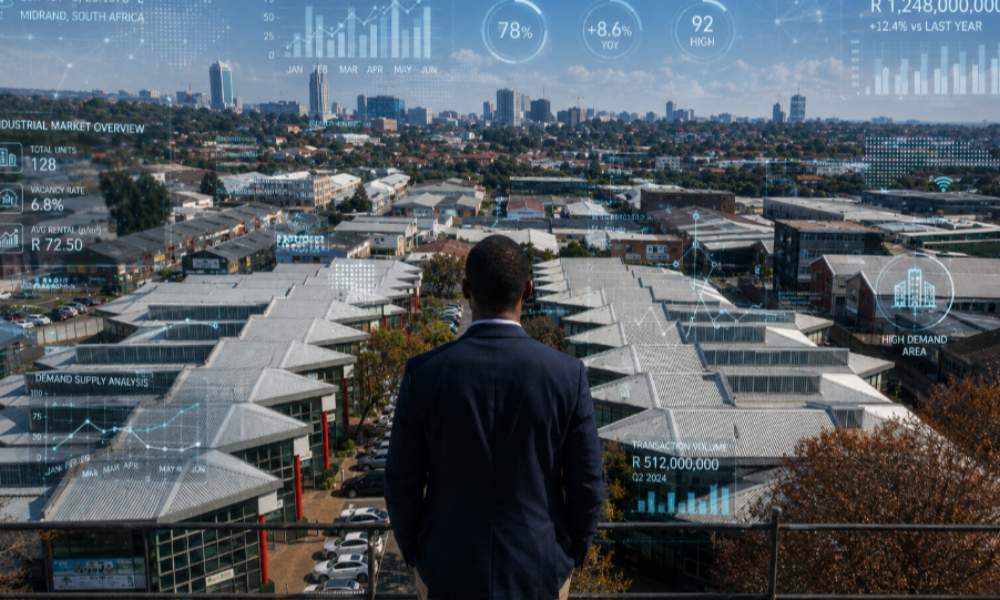
AI is the next wave. And it is already hitting. The difference this time is speed. And the difference between property classes is stark.
AI is not a uniform force. It hits different asset classes differently - some hard, some barely at all, some in ways that won’t show up in valuations for another five years.
Real estate is not one asset class. It never was. But for a long time, the market treated it that way - property was property, bricks were bricks, and a yield was a yield. That thinking has been breaking down for years.
The last decade has seen the rise of niched real estate classes. Investors who hold a diversified mix of offices, retail, industrial, healthcare, hotels and student accommodation under one investment structure will be forced to choose. Because the drivers of each sector have diverged so sharply that genuine expertise in one tells you almost nothing useful about another.
Think about it this way. An investor who owns a shopping centre, a factory, a suburban office block, and a private hospital is effectively running four completely different businesses. The shopping centre lives or dies on foot traffic, consumer confidence, and the threat of e-commerce. The warehouse depends on supply chain logistics, manufacturing output, and proximity to labour and distribution. The office block is hostage to employment trends, hybrid work policy, and whether the tenants who signed ten-year leases still need the same footprint when those leases expire. The hospital is driven by demographics, healthcare funding models, and population density, and student accommodation is determined by the number of students wanting to study and their need to live close to where they learn - forces that barely overlap with any of the other four.
Same asset class on paper. Completely different worlds in practice.
The danger now is making the same mistake with AI - assuming it is a uniform force that lifts or pressures all property equally. It is not. AI hits each sector through a different mechanism, at a different speed, with a different outcome.
On the surface, AI changes nothing about where people live. People still need shelter. Families still need space. The demand for housing is not a function of machine learning models.
But the indirect effects are significant and underappreciated.
AI accelerates the remote work thesis. If more knowledge workers can do their jobs from anywhere - because the tools are smarter, the collaboration software is better, the barriers to distributed work keep falling - then the geography of residential demand shifts. That is already happening. But AI compounds it. When you can use a model to draft, edit, research, and analyse from a kitchen table in Ballito or a golf estate in George, the premium attached to being near a CBD weakens further.
There is also a construction angle. AI-assisted design, procurement, and project management is starting to reduce building costs at the margin. That will not solve the housing affordability crisis - land costs and regulation are the real constraints - but it is a slow-moving tailwind for supply.
AI won’t change how many people need a home. It will change which area they choose to live in.
Net effect: residential demand holds. But where that demand concentrates is quietly shifting. The cities that rely on proximity to white-collar office employment for their residential premium should pay attention.
Retail is not one asset class. It never was. The mistake most analysts make is treating it as monolithic when it is three or four completely different businesses sitting under the same label.
Big regional malls have had a harder decade than almost any other real estate format. But the ones that survived did so by asking a fundamental question: what can we offer that a screen cannot?
The answer is experience. Entertainment. Food. Events. The malls that leaned into this found a second life. The ones that did not are either empty or being converted. AI does not change this dynamic. The reinvention was already underway, and it will continue on its own logic.
Neighbourhood convenience retail tells a different story. This format has proved remarkably resilient. People still need groceries, pharmacies, and services within walking or driving distance. In South Africa specifically, township retail has been one of the growth stories of the last decade - underserved communities, rising consumer spending, and formats built around daily necessity rather than discretionary browsing. AI is not a threat here. If anything, smarter inventory management and localised marketing tools will help operators in this segment run tighter, more profitable businesses.
You can’t click and collect a haircut. Convenience retail isn’t going anywhere.
Line shops - the street-facing retail strips that fill secondary high streets and suburban nodes - are in genuine trouble. And the trouble is global. The economics of a line shop depend on foot traffic and passing trade. As that traffic fragments, as consumers default to online for anything that can be delivered, the marginal line shop becomes unviable. This is happening in Cape Town as much as it is in Los Angeles or Manchester. Even well-run cities are not immune. Sea Point Main Road holds up because the density and the demographic support it. But on Voortrekker Road, the picture is different. And even in markets like London’s West End or Manhattan’s Fifth Avenue, vacancy rates tell a story that the headline rents obscure.
AI will marginally accelerate this pressure online shops by making online discovery and fulfilment even more frictionless. But the structural decline was already in motion. AI is not the cause. It is a tailwind for a trend that did not need one.
This is where I have the strongest view, and the least doubt.
Offices are in serious trouble. Not in a cyclical, post-pandemic-recovery, work-from-home-will-pass kind of trouble. In a structural, the-reason-people-came-to-offices-is-being-systematically-removed kind of trouble.
Think about why office buildings were built. You concentrated knowledge workers in one place because information was expensive to transmit, collaboration required physical proximity, and supervision required line of sight. All three of those assumptions are either gone or going.
AI accelerates every one of these trends. When a junior analyst can use a model to produce in two hours what previously took a team two weeks, you need fewer junior analysts. When an AI can synthesise research, draft documents, and flag inconsistencies faster than a room full of people, the economics of dense office occupancy collapse.
Goldman Sachs estimates that data centres will account for 8.5% of America’s peak power demand by 2027, up from 4.1% in 2025. That capital is going somewhere. It is going into compute, not into conference rooms.
Grade-A office in the right node may survive. The rest is being disrupted and will eventually be made redundant. Eventually it will be converted to housing.
The law firms, the financial services companies, the consulting practices - the anchor tenants that filled premium office buildings for generations - are going to need less space. They are not going to need it gradually. They are going to need it suddenly, when leases expire and they discover that headcount is flat or falling while AI agents keep growing.
Well-located, amenity-rich offices may survive. Landlords with genuinely differentiated product in prime nodes will find occupiers. Everything else - secondary locations, average product offices, buildings that rely on price rather than quality - is in structural oversupply that no amount of rental discounting will fix.
If you hold office real estate, you need to be asking one question: what is the real case for occupancy in 2030? Not the optimistic case. The real one.
Industrial real estate is the asset class that has held up best across every disruption of the last decade, and the AI era is unlikely to change that fundamental durability.
The reason is simple. Physical goods still must be stored, moved, and distributed. AI does not dematerialise supply chains. If anything, the acceleration of e-commerce - which AI continues to drive - increases the volume of goods that need to flow through logistics and distribution infrastructure.
But here is where I think the picture is more nuanced than most industrial landlords want to acknowledge.
AI is making manufacturing faster and more precise. Just-in-time delivery is getting genuinely close to just-in-time - not as a management aspiration but as an operational reality. When manufacturers can predict demand more accurately, produce more responsively, and coordinate logistics more efficiently, they carry less inventory. When they carry less inventory, they need less storage space per unit of output.
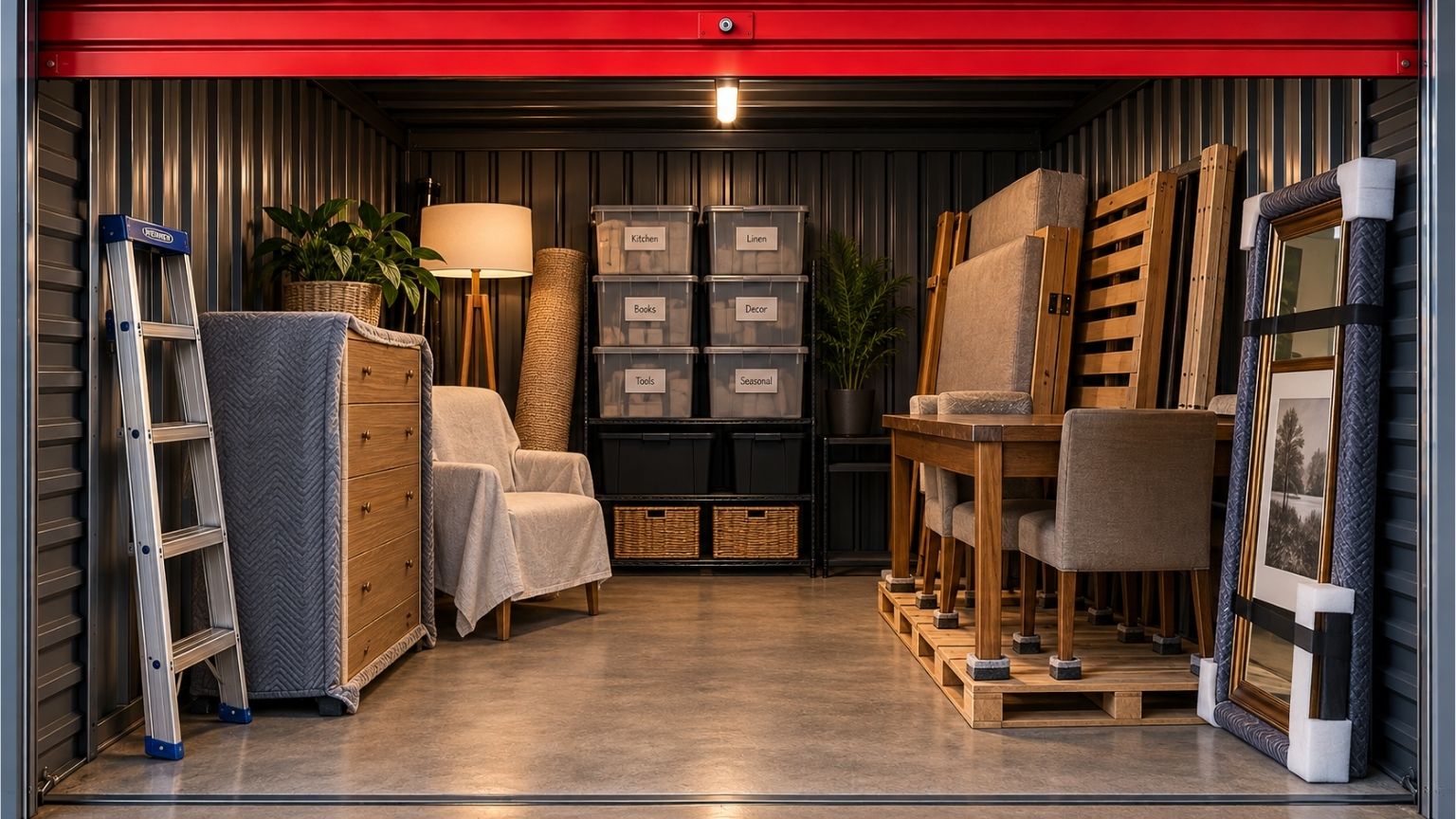
The implication is not that industrial demand falls. It is that the unit size profile shifts. The 10,000 square metre bulk warehouse starts to look oversized for many occupiers who previously needed that footprint. The 500 to 1,500 square metre unit - flexible, accessible, close to urban consumption centres - becomes more valuable. Small and mid-sized industrial space near population centres is likely to be in sustained demand.
The landlords who will win in industrial are those who understand that the future tenant is not a company storing six months of stock. It is a company holding three weeks of stock and turning it fast. That is a different building with a different lease structure.
Real estate is not immune to AI. But it is not uniformly threatened either. The divergence between asset classes is accelerating, and the window to reposition is shorter than most people think. My summary of each asset sector is as follows:
• Residential demand holds. But where people choose to live is quietly shifting away from CBDs and towards wherever life is affordable and connected.
• Retail is three different stories. Experience-led malls survive. Suburban convenience and township retail survive and thrive through necessity. Line shops on urban
roads are in structural trouble unless they are in the most prime locations.
• Offices face a structural reckoning that has barely begun. The real damage shows up when the leases end.
• Industrial stays durable. But the winning landlord is not the one with the biggest box - it is the one closest to where goods need to be tomorrow morning.
The bottom line is that AI is not the disruption. AI is the accelerant.
The question is not whether your buildings are full today. It is whether the reason people come to them still exists - and whether it will still exist in five years when the next lease cycle hits.
Because if the answer is no, no discount, no incentive, and no broker relationship is going to save you.